nonaAi for coders
Describe it once. Your team builds it, reviews it, tests it.
Turn the agents you already code with into a real team: a fast builder, a skeptical reviewer, a tester and a planner — each a hat on an agent you pick. You answer the odd question; the work keeps moving. And you watch it happen — in nonaAi's own built-in viewer.
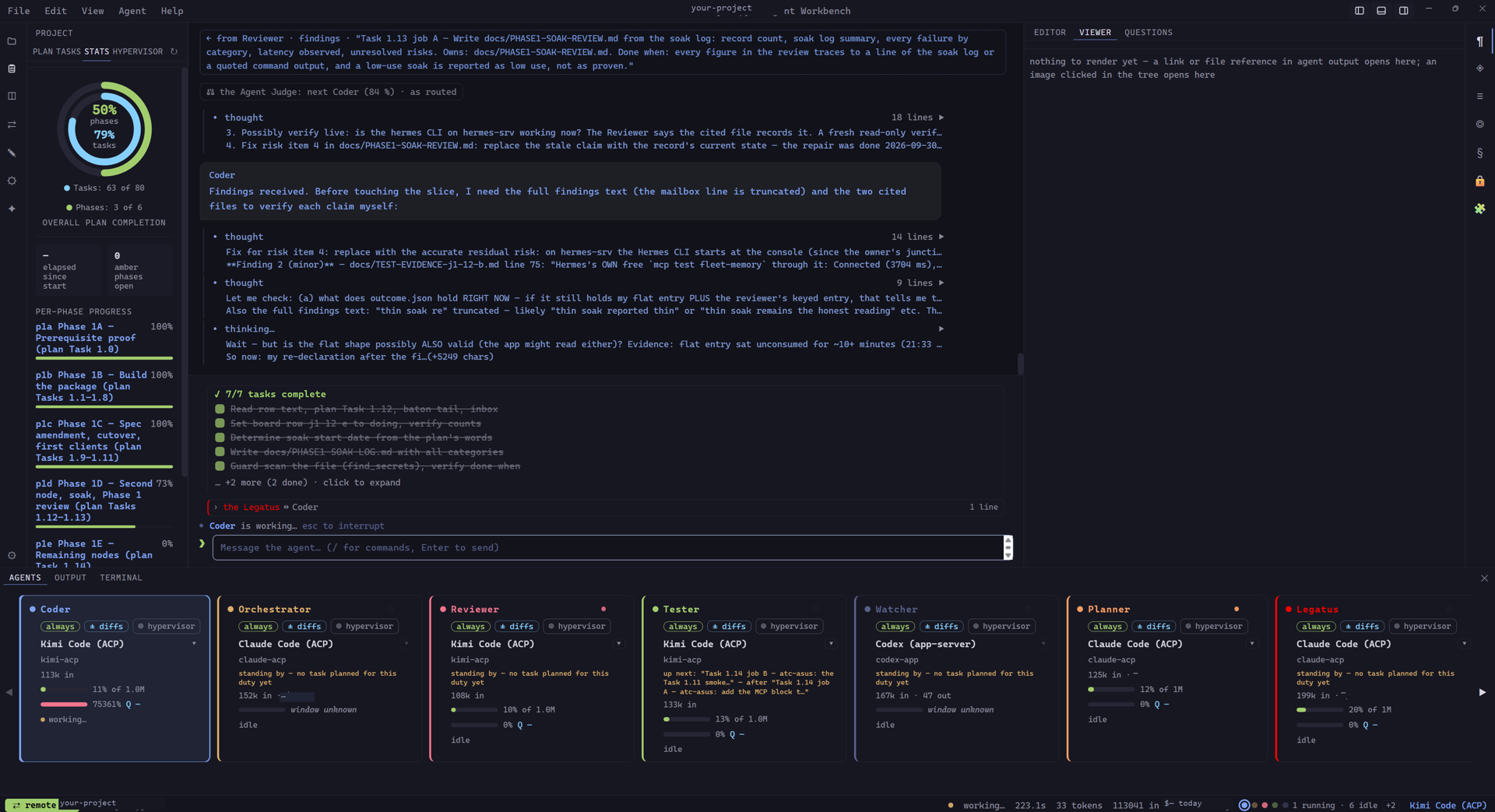
nonaAi running a coding project — seven duties, each wearing a hat on an agent you chose (Coder on Kimi, Orchestrator & Planner on Claude, Watcher on Codex…). Example session.
Built for the way you work
The things coders actually want.
Not another chat box. A team that plans, writes, reviews and tests — and shows its work where you can see it.
Parallel lanes
A planner, a coder, a reviewer and a tester work at once — each in its own git worktree, never stepping on each other.
A diff gate, always
Nothing merges silently. Every change lands as a red/green diff you can read, approve or send back.
Green or it's not done
The tester runs your suite every turn and reports what broke — in the built-in viewer, right beside the code.
See it, don't just read it
Built a page? A chart? A report? It renders in nonaAi's own viewer — no switching to a browser.
Spend in view
Per-duty budgets in dollars, from your agents' own usage. A lane stops at your line and asks.
Just files & git
Plans, rules, memory and the baton are plain files in your repo. No lock-in, no black box.
nonaAi's built-in viewer
See your work — without leaving the app.
A charter duty can render straight into nonaAi's own viewer: a live preview of the page it built, the diff it's proposing, the test run it just finished. Click the tabs — it's the same surface your team renders into.
The built-in viewer renders local HTML, SVG and images your team produces, in a sandboxed frame. Traders get charts and stats the same way — a charter duty draws them and opens them right here. Example content shown.
One head, many hats — the coding wardrobe
Four hats that make a coding team.
Each is a charter — a character and a job — you put on any agent you own. Give the Coder hat to Claude, the Reviewer hat to Codex, mix however you like.
Turns each planned step into working, runnable code. Small commits, tests where they exist, asks before anything risky.
Doubts the happy path. Reads the diff against the requirement, lists findings by severity, blocks anything unsafe. Read-only — it returns findings, never rewrites.
Runs your suite every turn, reports exactly what broke, and renders the result in the viewer. Green or it isn't done.
Breaks a vague ask into ordered steps anyone could follow, names the duty for each, and sets what "done" means. Re-plans when reality moves.
Example charters. Build your own by hand in the Duties Builder, or describe one and let the Smart Duties Builder draft it. How hats & heads work →
A morning with your coding team
Not a chatbot you babysit. A team that keeps going.
An example — yours will look different. Names and times are illustrative.
Governed, not just parallel
The guardrails a serious codebase needs.
No silent writes
Every change is proposed as a diff you accept, reject or refine. The agent never mutates your tree behind your back.
Lanes don't collide
Each duty works its own git worktree and branch, so parallel agents never overwrite each other's work.
It can't exceed your CLI
A duty can never do more than the same agent run from its own terminal — no extra reach, ever (LAW-0).
Every effect is logged
Tool runs, file writes and test results are booked to a record in your repo. Nothing happens off the books.
Give your agents a team to work in.
Ship faster, review everything, keep it green — on your own machine.